You'd better open your doors because this is going to blow them right off. Feel free to Tweet or repost.
E-Book Royalty Math: The Big Tilt
To mark the one-year anniversary of the Great Blackout, Amazon's weeklong shut down of e-commerce for nearly all of Macmillan's titles, we’re sending out a series of alerts this week and next on the state of e-books, authorship, and publishing. The first installment (“How Apple Saved Barnes & Noble. Probably.”) discussed the outcome, one year later, of that battle. Today, we look at the e-royalty debate, which has been simmering for a while, but is likely to soon heat up as the e-book market grows.
E-book royalty rates for major trade publishers have coalesced, for the moment, at 25% of the publisher’s receipts. As we’ve pointed out previously, this is contrary to longstanding tradition in trade book publishing, in which authors and publishers effectively split the net proceeds of book sales (that's how the industry arrived at the standard hardcover royalty rate of 15% of list price). Among the ills of this radical pay cut is the distorting effect it has on publishers’ incentives: publishers generally do significantly better on e-book sales than they do on hardcover sales. Authors, on the other hand, always do worse.
How much better for the publisher and how much worse for the author? Here are examples of author’s royalties compared to publisher’s gross profit (income per copy minus expenses per copy), calculated using industry-standard contract terms:
“The Help,” by Kathryn Stockett
Author’s Standard Royalty: $3.75 hardcover; $2.28 e-book. Author’s E-Loss = -39%
Publisher’s Margin: $4.75 hardcover; $6.32 e-book. Publisher’s E-Gain = +33%
“Hell’s Corner,” by David Baldacci
Author's Standard Royalty: $4.20 hardcover; $2.63 e-book. Author’s E-Loss = -37%
Publisher’s Margin: $5.80 hardcover; $7.37 e-book. Publisher’s E-Gain = +27%
“Unbroken,” by Laura Hillenbrand
Author’s Standard Royalty: $4.05 hardcover; $3.38 e-book. Author’s E-Loss = -17%
Publisher’s Margin: $5.45 hardcover; $9.62 e-book. Publisher’s E-Gain = +77%
So, everything else being equal, publishers will naturally have a strong bias toward e-book sales. It certainly does wonders for cash flow: not only does the publisher net more, but the reduced royalty means that every time an e-book purchase displaces a hardcover purchase, the odds that the author’s advance will earn out -- and the publisher will have to cut a check for royalties -- diminishes. In more ways than one, the author’s e-loss is the publisher’s e-gain.
Inertia, unfortunately, is embedded in the contractual landscape. If the publisher were to offer more equitable e-royalties in new contracts, it would ripple through much of the publisher’s catalog: most major trade publishers have thousands of contracts that require an automatic adjustment or renegotiation of e-book royalties if the publisher starts offering better terms. (Some publishers finesse this issue when they amend older contracts, many of which allow e-royalty rates to quickly escalate to 40% of the publisher’s receipts. Amending old contracts to grant the publisher digital rights doesn’t trigger the automatic adjustment, in the publisher's view.) Given these substantial collateral costs, publishers will continue to strongly resist changes to their e-book royalties for new books.
Resistance, in the long run, will be futile. As the e-book market continues to grow, competitive pressures will almost certainly force publishers to share e-book proceeds fairly. Authors with clout simply won’t put up with junior partner status in an increasingly important market. New publishers are already willing to share fairly. Once one of those publishers has the capital to pay even a handful of authors meaningful advances, or a major trade publisher decides to take the plunge, the tipping point will likely be at hand.
In the meantime, what’s to be done? We’ll address that in our next installment in this series, on Monday.
Our assumptions and calculations for the figures above follow.
--------------------------------------------------------
Doing the Numbers: Hardcover
To keep things as simple as possible, we assumed that for hardcovers: (1) the publisher sells at an average 50% discount to the wholesaler or retailer (2) the royalty rate is 15% of list price (as it is for most hardcover books, after 10,000 units are sold), (3) the average marginal cost to manufacture the book and get it to the store is $3, and (4) the return rate is 25% (a handy number -- if one of four books produced is returned, then the $3 marginal cost of producing the book is spread over three other books, giving us a return cost of $1 per book). We also rounded up retail list price a few pennies to give us easy figures to work with.
“The Help,” by Kathryn Stockett has a hardcover retail list price of $25. The standard royalty (15% of list) would be $3.75. The publisher grosses $12.50 per book at a 50% discount. Subtract from that the author's royalty ($3.75), cost of production ($3), and cost of returns ($1), and the publisher nets $4.75 on the sale of a hardcover book.
“Hell’s Corner” by David Baldacci, has a retail list price is $28. The standard royalty is $4.20; the publisher's gross is $14. Subtract royalties ($4.20), production and return costs ($4), and the publisher nets $5.80.
“Unbroken,” by Laura Hillenbrand has a hardcover list price of $27. Standard royalties are $4.05. The publisher's gross is $13.50. Subtract royalties of $4.05 and production and return costs of $4, and the publisher nets $5.45.
Doing the Numbers: E-Book
E-book royalty rates are uniform among the major trade publishers, but pricing and discounting formulas fall into two camps: the reseller model favored by Amazon (Random House is the only large trade publisher using this model) and the agency model introduced by Apple a year ago. (See yesterday’s alert for more information on these models.)
Under the reseller model, the online bookseller pays 50% of the retail list price of the book to the publisher and sells the book at whatever price the bookseller chooses (for bestsellers, Amazon typically sells Random House e-books at a significant loss). Random House frequently prices the e-book at the same price as the hardcover until a paperback edition is available.
Under the agency model, the online bookseller pays 70% of the retail list price of the e-book to the publisher. The bookseller, acting as the publisher’s agent, sells the e-book at the price established by the publisher, but the publisher is constrained by agreement with Apple and others to set a price significantly below that for the hardcover version.
The unit costs to the publisher, under either model, are simply the author’s royalty and the encryption fee, for which we’ll use a generous 50 cents per unit.
Here’s the math:
“The Help” has an e-book list price of $13 and is sold under the agency model. Publisher grosses 70% of retail price, or $9.10. Author's royalty is 25% of publisher receipts, or $2.28. Publisher nets $6.32. ($9.10 minus $2.28 royalties and $0.50 encryption fee.)
“Hell’s Corner” is also sold under the agency model at a retail list price of $15 list price. Publisher grosses 70% of retail price, $10.50. Author's royalty is 25% of publisher receipts, or $2.63. Publisher nets $7.37. ($10.50 minus $2.63 royalties and $0.50 encryption fee.)
“Unbroken” is sold by Random House under the reseller model at a retail list price of $27. Publisher grosses $13.50 on the sale. Author’s royalty, at 25%, is $3.38. Random House nets $9.62. ($13.50 minus $3.38 royalties and $0.50 encryption fee.)
------------
Feel free to forward, post, or tweet. Here is a short URL for linking: http://tiny.cc/r71q0


04 February 2011
How Apple Saved Barnes & Noble. Probably.
Here's the text on an email I recieved from the Authors Guild this week:
How Apple Saved Barnes & Noble. Probably.
Happy blackout anniversary! Where were you when the lights went out? We're sending out a series of alerts this week and next that look at the state of e-books, authorship and publishing to mark the one-year anniversary of the Great Blackout, when Amazon attempted to protect its near complete dominance of the rapidly growing e-book market through a stunning, punitive act against a publisher that dared to challenge its terms. (To see our account of this showdown as it happened -- posted last Groundhog Day -- go to "The Right Battle at the Right Time.")
It was one year ago last Saturday that Amazon turned out the lights on nearly all of Macmillan's books, removing the "buy buttons" from the print and electronic editions of thousands of titles. Macmillan authors, many of whom had linked their websites to Amazon pages that were suddenly disabled and useless, found themselves cut off from readers who frequented the dominant online bookstore.
Amazon's stunning move was a preemptive strike, an attempt to keep Macmillan from going through with its plan to shift to an "agency model" for selling e-books. Macmillan, which immediately saw its online sales plummet, stood firm and prevailed: Amazon ended the blackout after a week.
The story of the blackout and its aftermath reveals much about the high-stakes device and format war that's reshaping the publishing industry. Last year's Amazon-Macmillan showdown was a critical battle in that war.
One Year Ago: Amazon's 90% E-Book Market Share
By last January, Amazon seemed destined to retain an overwhelming share of the e-book market. It then, by most accounts, commanded about 90% of the U.S. trade e-book market. Barnes & Noble had entered the game just two months before, launching the Nook in time, barely, for the critical holiday season. Few in the industry were optimistic about Barnes & Noble's e-book efforts, however.
Amazon's strategy, it seemed clear, was to leverage its formidable advantages -- including its dominance of the online print book market -- to all but lock up the e-book market. If it was successful, Amazon would control the equivalent of a vast online book club. Any publisher wanting to sell to the club would have to agree to Amazon's terms. This was an ugly prospect: book clubs tend to be resilient, but ultra low-margin enterprises for all involved, except the proprietor.
Amazon went all-in with the Kindle and its proprietary e-reading software. This commitment was most evident on Amazon's home page -- surely the most valuable retail space on the Internet -- on which it featured the Kindle nearly every day since its launch.
Amazon's most potent weapon in the e-book format and device war, however, was the strategy it deployed so effectively in its conquest of online bookselling: using its seemingly limitless financial resources to discount books at rates no competitor could long sustain. Amazon now pushed this tactic to a new level, routinely buying e-books at wholesale prices of $13 and $14 and immediately selling them at a loss, for $9.99. This not only built customer enthusiasm for the Kindle and e-books, but helped crush online and offline competitors that were selling physical books. Amazon could win the future as it finished off the past.
The prospects for Barnes & Noble in this environment were decidedly grim. Its net income had plummeted during the recession, falling 65% in two years. For Amazon, however, it was as if the Great Recession hadn't happened. Its revenues had grown 65% and its net income increased 72% over the prior two years. Its market capitalization, which had climbed past $55 billion (it stands at $77 billion today), towered over Barnes & Noble's $1 billion.
The e-book market, by all appearances, was for sale to the highest bidder -- the retailer willing and able to sell the most digital books at a loss. Barnes & Noble was in no shape to compete against Amazon in that game.
Then the game shifted.
Enter Apple
On Wednesday, January 27, 2010, Steve Jobs announced the launch of the iPad and the iBookstore.
Apple wouldn't sell e-books under the reseller model that Amazon had been using to lock down the market. (Under that model, the publisher sells e-books to a reseller at a discount of about 50%. The reseller can then sell the e-book at any price, constrained only by antitrust law and the reseller's ability to absorb losses.) Instead, Apple would sell e-books under the same "agency model" it used for iPhone apps. Under the agency model, Apple acts as the publisher's agent, selling e-books at the price established by the publisher and taking a 30% commission on each sale. To participate, a publisher would have to agree to a set of ceilings on e-book prices, generally $12.99 or $13.99 for new books. A publisher would also have to agree not to sell to others under more favorable terms.
If the agency model took hold, unfettered discounting of e-books would be out. Amazon would lose its ability to buy market share in a nascent, booming industry.
Five of the big six trade publishers (not Random House) allowed their logos to be displayed at Apple's iPad announcement. The next day, Thursday, Macmillan CEO John Sargent informed Amazon that it would be shifting to the agency model when the iPad was released. It appears that he was the first publisher to do so.
If there were any doubts about the stakes in this battle, they were erased the following day, when Amazon retaliated by removing the buy buttons from all Macmillan titles (with exceptions for textbooks and scholarly books, where Amazon faced stiff online competition). It removed the buy buttons from all editions -- not just the electronic version -- in an attempt to use its clout in the print book industry to enforce its preferred business model in the e-book industry.
Though the e-book market was growing fast, cutting off Macmillan and its authors from Amazon's print book market -- Amazon controlled an estimated 75% of online trade book print sales in the U.S. at the time -- was far more punitive than just severing Macmillan's ties to the e-book market. Amazon had used this buy button removal tactic before to punish publishers in the U.S. and the U.K. who fail to fall in line with Amazon's business plans, but it had never done so as boldly or comprehensively.
Amazon blinked, perhaps after consulting with antitrust counsel. After a one-week blackout, Amazon and Macmillan came to terms, and Macmillan could sell e-books through Amazon using the agency model. Four of the other big six would come to terms with Amazon on the agency model. Random House, the largest trade publisher, has chosen not to use the agency model, for reasons we will describe in the future (hint: Stieg Larsson).
One Year Later
Barnes & Noble is, unexpectedly, the biggest beneficiary of Apple's entry into the e-book market. With five of the big six trade book publishers using the agency model, Barnes & Noble was able to enter the e-book market based largely on its customer relationships and on technological innovation, rather than on its willingness to burn through capital to subsidize book sales. Its share of the e-book market has grown rapidly over the past year, approaching 20% of trade sales. Its introduction of the Nook Color reportedly gave it a substantial lift over the holidays.
Barnes & Noble still finds itself subsidizing sales of Random House e-books -- it generally matches Amazon's price on those titles -- but those costs appear manageable. Barnes & Noble faces substantial challenges, as do all physical bookstores, as publishing moves to its partly digital future, but it appears to have regained its footing. Should the agency model ever collapse, however, Barnes & Noble could quickly find itself at Amazon's mercy. Amazon's growth and profitability continue to soar, and its appetite for out-discounting competitors at any cost appears undiminished.
In the meantime, Apple is not standing still. According to numerous, but conflicting, reports Apple may be revising the terms for booksellers using iPhone and iPad apps as e-readers. We will be watching these developments closely.
Tomorrow: The E-Royalty Debate
------------
Feel free to forward, post, or tweet. Here is a short URL for linking: http://tiny.cc/s6433
How Apple Saved Barnes & Noble. Probably.
Happy blackout anniversary! Where were you when the lights went out? We're sending out a series of alerts this week and next that look at the state of e-books, authorship and publishing to mark the one-year anniversary of the Great Blackout, when Amazon attempted to protect its near complete dominance of the rapidly growing e-book market through a stunning, punitive act against a publisher that dared to challenge its terms. (To see our account of this showdown as it happened -- posted last Groundhog Day -- go to "The Right Battle at the Right Time.")
It was one year ago last Saturday that Amazon turned out the lights on nearly all of Macmillan's books, removing the "buy buttons" from the print and electronic editions of thousands of titles. Macmillan authors, many of whom had linked their websites to Amazon pages that were suddenly disabled and useless, found themselves cut off from readers who frequented the dominant online bookstore.
Amazon's stunning move was a preemptive strike, an attempt to keep Macmillan from going through with its plan to shift to an "agency model" for selling e-books. Macmillan, which immediately saw its online sales plummet, stood firm and prevailed: Amazon ended the blackout after a week.
The story of the blackout and its aftermath reveals much about the high-stakes device and format war that's reshaping the publishing industry. Last year's Amazon-Macmillan showdown was a critical battle in that war.
One Year Ago: Amazon's 90% E-Book Market Share
By last January, Amazon seemed destined to retain an overwhelming share of the e-book market. It then, by most accounts, commanded about 90% of the U.S. trade e-book market. Barnes & Noble had entered the game just two months before, launching the Nook in time, barely, for the critical holiday season. Few in the industry were optimistic about Barnes & Noble's e-book efforts, however.
Amazon's strategy, it seemed clear, was to leverage its formidable advantages -- including its dominance of the online print book market -- to all but lock up the e-book market. If it was successful, Amazon would control the equivalent of a vast online book club. Any publisher wanting to sell to the club would have to agree to Amazon's terms. This was an ugly prospect: book clubs tend to be resilient, but ultra low-margin enterprises for all involved, except the proprietor.
Amazon went all-in with the Kindle and its proprietary e-reading software. This commitment was most evident on Amazon's home page -- surely the most valuable retail space on the Internet -- on which it featured the Kindle nearly every day since its launch.
Amazon's most potent weapon in the e-book format and device war, however, was the strategy it deployed so effectively in its conquest of online bookselling: using its seemingly limitless financial resources to discount books at rates no competitor could long sustain. Amazon now pushed this tactic to a new level, routinely buying e-books at wholesale prices of $13 and $14 and immediately selling them at a loss, for $9.99. This not only built customer enthusiasm for the Kindle and e-books, but helped crush online and offline competitors that were selling physical books. Amazon could win the future as it finished off the past.
The prospects for Barnes & Noble in this environment were decidedly grim. Its net income had plummeted during the recession, falling 65% in two years. For Amazon, however, it was as if the Great Recession hadn't happened. Its revenues had grown 65% and its net income increased 72% over the prior two years. Its market capitalization, which had climbed past $55 billion (it stands at $77 billion today), towered over Barnes & Noble's $1 billion.
The e-book market, by all appearances, was for sale to the highest bidder -- the retailer willing and able to sell the most digital books at a loss. Barnes & Noble was in no shape to compete against Amazon in that game.
Then the game shifted.
Enter Apple
On Wednesday, January 27, 2010, Steve Jobs announced the launch of the iPad and the iBookstore.
Apple wouldn't sell e-books under the reseller model that Amazon had been using to lock down the market. (Under that model, the publisher sells e-books to a reseller at a discount of about 50%. The reseller can then sell the e-book at any price, constrained only by antitrust law and the reseller's ability to absorb losses.) Instead, Apple would sell e-books under the same "agency model" it used for iPhone apps. Under the agency model, Apple acts as the publisher's agent, selling e-books at the price established by the publisher and taking a 30% commission on each sale. To participate, a publisher would have to agree to a set of ceilings on e-book prices, generally $12.99 or $13.99 for new books. A publisher would also have to agree not to sell to others under more favorable terms.
If the agency model took hold, unfettered discounting of e-books would be out. Amazon would lose its ability to buy market share in a nascent, booming industry.
Five of the big six trade publishers (not Random House) allowed their logos to be displayed at Apple's iPad announcement. The next day, Thursday, Macmillan CEO John Sargent informed Amazon that it would be shifting to the agency model when the iPad was released. It appears that he was the first publisher to do so.
If there were any doubts about the stakes in this battle, they were erased the following day, when Amazon retaliated by removing the buy buttons from all Macmillan titles (with exceptions for textbooks and scholarly books, where Amazon faced stiff online competition). It removed the buy buttons from all editions -- not just the electronic version -- in an attempt to use its clout in the print book industry to enforce its preferred business model in the e-book industry.
Though the e-book market was growing fast, cutting off Macmillan and its authors from Amazon's print book market -- Amazon controlled an estimated 75% of online trade book print sales in the U.S. at the time -- was far more punitive than just severing Macmillan's ties to the e-book market. Amazon had used this buy button removal tactic before to punish publishers in the U.S. and the U.K. who fail to fall in line with Amazon's business plans, but it had never done so as boldly or comprehensively.
Amazon blinked, perhaps after consulting with antitrust counsel. After a one-week blackout, Amazon and Macmillan came to terms, and Macmillan could sell e-books through Amazon using the agency model. Four of the other big six would come to terms with Amazon on the agency model. Random House, the largest trade publisher, has chosen not to use the agency model, for reasons we will describe in the future (hint: Stieg Larsson).
One Year Later
Barnes & Noble is, unexpectedly, the biggest beneficiary of Apple's entry into the e-book market. With five of the big six trade book publishers using the agency model, Barnes & Noble was able to enter the e-book market based largely on its customer relationships and on technological innovation, rather than on its willingness to burn through capital to subsidize book sales. Its share of the e-book market has grown rapidly over the past year, approaching 20% of trade sales. Its introduction of the Nook Color reportedly gave it a substantial lift over the holidays.
Barnes & Noble still finds itself subsidizing sales of Random House e-books -- it generally matches Amazon's price on those titles -- but those costs appear manageable. Barnes & Noble faces substantial challenges, as do all physical bookstores, as publishing moves to its partly digital future, but it appears to have regained its footing. Should the agency model ever collapse, however, Barnes & Noble could quickly find itself at Amazon's mercy. Amazon's growth and profitability continue to soar, and its appetite for out-discounting competitors at any cost appears undiminished.
In the meantime, Apple is not standing still. According to numerous, but conflicting, reports Apple may be revising the terms for booksellers using iPhone and iPad apps as e-readers. We will be watching these developments closely.
Tomorrow: The E-Royalty Debate
------------
Feel free to forward, post, or tweet. Here is a short URL for linking: http://tiny.cc/s6433
25 January 2011
5 Rules for Indie Publishing
Back in September or October, Heidi and I really started kicking around the idea of flipping the Big 6 the bird (more my idea, I don't think Heidi approves of flipping of said bird) and following the course Joe Konrath, David Morrell and others are plotting.
We spent a week or two trying to figure out what criteria we'd use to ultimately make the decision to publish on our own, and came up with 5 rules or guideline we'd use to aid in our decision-making.
Here they are (count 'em, kids) for your perusing pleasure:
1. Know why you're publishing independently
This is a no-brainer. Independent publishing can not be a last resort after years spent collecting rejections from agents, big publishers, small publishers, ePublishers, etc.. The decision has to be--HAS TO BE--the writer's first choice.
Why?
If you are not going to treat your book the way a publisher--who'd spend thousands of dollars to print, market and distribute--is going to treat it, then independent publishing probably isn't going to be for you. You have to love it enough to make sure it receives the attention it deserves and have to be 100% committed to selling the crap out of it and believing in it. You have to believe you know what's best for your book.
It's your baby. Don't leave it locked up in a hot car while you drink beer.
2. Know risk to gain ratio
Our experience with a major travel publisher taught us a few things. It taught us that a publisher isn't always going to do the things it says it's going to do. Our publicist's campaign for our book consisted of sending .jpgs of our cover to bookstores prior to signings that we'd set up ourselves. Our publicist contacted no local media and couldn't even get us postcards or promotional material to take to conferences and conventions we'd attended on our own dime. We didn't expect subway posters and bus stops, but c'mon. Don't pee on my leg and tell me that's what I paid for.
Then the publisher printed a second edition of our book while continuing to call it a first edition and we haven't seen a royalty statement in months.
I know that some people have great experience with publishers. We haven't.
I'll gladly collect 70% instead of 12% to do the work my wife and I have been doing since our book was released--to promote a book that I've sweated and lost more sleep over than a publisher ever would. And I know that if I fail, the failure is my own.
But I'd rather fail on my own than fail because my query wasn't good enough, because a publisher cut my print run, because I got a contract for a print run I could never sell out, because marketing decided my book was urban fantasy instead of supernatural suspense, because the release date coincided with a release by Snooki or Nicole Richie.
And I'd rather take 70% of $2.99 for a book I spent 10,000 hours on than take 10% of $19.99 for a book a publisher spent a week on.
3. Know what you're compromising
->I'm losing the valuable experience of thousands of cumulative hours shared by the agents, editors and marketing departments who'd have a hand in publishing my book.
But I trust my associates from Seton Hill and the friends I've made at conferences and conventions to give me the same type of support. I know the relationships wouldn't be the same--some would be less personal, some more--but it's a price I pay. (And I wouldn't trust some of the professionals I've met at conferences and conventions with a laundry list or a recipe, let alone a manuscript. I'm looking at you, ------ -----------!)
->I'm losing national distribution.
We know that's not true anymore.
->I'm losing credibility.
I'm not sure that a Big 6 contract guarantees credibility either. I have a master's degree, am adjunct faculty at a distinguished university and am a member of The Authors Guild. I've worked with a major publisher on a big non-fiction project. I'm not Stephen King. But neither is Snooki.
4. Know that you are the company
You pick your release date. You choose a cover. You market it. You go to conferences and signings to represent yourself and the book. You are responsible for your own finances. You deal with complaints from readers. You contact local media. You set up signings and purchase all of your own promotional material. You pay somebody to format the book or you format it yourself. You get the pat on the back. You hang your head when readers point out typos and plot holes that you've missed.
5. Know if you have the time and energy
In addition to writing the book, you do all of the things mentioned above. And then you have to write another book. There's a lot of discussion on Konrath's blog about authors with multiple books doing better than authors with only one. Check out http://jakonrath.blogspot.com/ to read what people who have a hell of a lot more experience in independent publishing (and 'real' publishing) than me have to say about it.
I don't know if independent publishing is for the faint of heart. But seeing that I'd have the freedom to write what I want instead of writing what I hope an agent would want is a very liberating experience. And if it bombs it bombs. I change my name and write something else. Or not. I can do whatever I want.
As the writer I should've always had that power--not the marketing department or a CFO. Sometime I get the impression that a lot of editors and agents and publishers put writers at the bottom of a very tall ladder. I think independent publishing puts writers at the top.
And look, I wrote this whole post barely mentioning the way the publishing industry has eaten itself into a very awkward and ugly corner. Let the agents have Snooki. I think the readers are smart enough to follow the writing.
We spent a week or two trying to figure out what criteria we'd use to ultimately make the decision to publish on our own, and came up with 5 rules or guideline we'd use to aid in our decision-making.
Here they are (count 'em, kids) for your perusing pleasure:
1. Know why you're publishing independently
This is a no-brainer. Independent publishing can not be a last resort after years spent collecting rejections from agents, big publishers, small publishers, ePublishers, etc.. The decision has to be--HAS TO BE--the writer's first choice.
Why?
If you are not going to treat your book the way a publisher--who'd spend thousands of dollars to print, market and distribute--is going to treat it, then independent publishing probably isn't going to be for you. You have to love it enough to make sure it receives the attention it deserves and have to be 100% committed to selling the crap out of it and believing in it. You have to believe you know what's best for your book.
It's your baby. Don't leave it locked up in a hot car while you drink beer.
2. Know risk to gain ratio
Our experience with a major travel publisher taught us a few things. It taught us that a publisher isn't always going to do the things it says it's going to do. Our publicist's campaign for our book consisted of sending .jpgs of our cover to bookstores prior to signings that we'd set up ourselves. Our publicist contacted no local media and couldn't even get us postcards or promotional material to take to conferences and conventions we'd attended on our own dime. We didn't expect subway posters and bus stops, but c'mon. Don't pee on my leg and tell me that's what I paid for.
Then the publisher printed a second edition of our book while continuing to call it a first edition and we haven't seen a royalty statement in months.
I know that some people have great experience with publishers. We haven't.
I'll gladly collect 70% instead of 12% to do the work my wife and I have been doing since our book was released--to promote a book that I've sweated and lost more sleep over than a publisher ever would. And I know that if I fail, the failure is my own.
But I'd rather fail on my own than fail because my query wasn't good enough, because a publisher cut my print run, because I got a contract for a print run I could never sell out, because marketing decided my book was urban fantasy instead of supernatural suspense, because the release date coincided with a release by Snooki or Nicole Richie.
And I'd rather take 70% of $2.99 for a book I spent 10,000 hours on than take 10% of $19.99 for a book a publisher spent a week on.
3. Know what you're compromising
->I'm losing the valuable experience of thousands of cumulative hours shared by the agents, editors and marketing departments who'd have a hand in publishing my book.
But I trust my associates from Seton Hill and the friends I've made at conferences and conventions to give me the same type of support. I know the relationships wouldn't be the same--some would be less personal, some more--but it's a price I pay. (And I wouldn't trust some of the professionals I've met at conferences and conventions with a laundry list or a recipe, let alone a manuscript. I'm looking at you, ------ -----------!)
->I'm losing national distribution.
We know that's not true anymore.
->I'm losing credibility.
I'm not sure that a Big 6 contract guarantees credibility either. I have a master's degree, am adjunct faculty at a distinguished university and am a member of The Authors Guild. I've worked with a major publisher on a big non-fiction project. I'm not Stephen King. But neither is Snooki.
4. Know that you are the company
You pick your release date. You choose a cover. You market it. You go to conferences and signings to represent yourself and the book. You are responsible for your own finances. You deal with complaints from readers. You contact local media. You set up signings and purchase all of your own promotional material. You pay somebody to format the book or you format it yourself. You get the pat on the back. You hang your head when readers point out typos and plot holes that you've missed.
5. Know if you have the time and energy
In addition to writing the book, you do all of the things mentioned above. And then you have to write another book. There's a lot of discussion on Konrath's blog about authors with multiple books doing better than authors with only one. Check out http://jakonrath.blogspot.com/ to read what people who have a hell of a lot more experience in independent publishing (and 'real' publishing) than me have to say about it.
I don't know if independent publishing is for the faint of heart. But seeing that I'd have the freedom to write what I want instead of writing what I hope an agent would want is a very liberating experience. And if it bombs it bombs. I change my name and write something else. Or not. I can do whatever I want.
As the writer I should've always had that power--not the marketing department or a CFO. Sometime I get the impression that a lot of editors and agents and publishers put writers at the bottom of a very tall ladder. I think independent publishing puts writers at the top.
And look, I wrote this whole post barely mentioning the way the publishing industry has eaten itself into a very awkward and ugly corner. Let the agents have Snooki. I think the readers are smart enough to follow the writing.
24 January 2011
Low-Residency MFA Handbook: A Guide for Perspective Creative Writing Students
I am one of several Seton Hill Writers who contributed to the Low-Residency MFA Handbook: A Guide for Perspective Creative Writing Students by Lori A. May. This guide offers prospective graduate students an in-depth preview of low-residency creative writing MFA programs, as well as interviews with program directors, faculty, alumni, and current students.
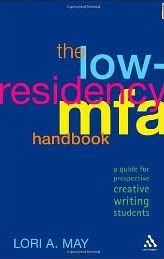
Low-Residency MFA Handbook by Lori A. May
Here is the full list of Seton Hill Writers:
Shelley Bates (Shelley Adina)
Matt Duvall
Natalie Duvall
Heidi Ruby Miller
Jason Jack Miller
Cynthia Ravinski
Nicole Taft
Albert Wendland
Low-Residency MFA Handbook by Lori A. May
Here is the full list of Seton Hill Writers:
Shelley Bates (Shelley Adina)
Matt Duvall
Natalie Duvall
Heidi Ruby Miller
Jason Jack Miller
Cynthia Ravinski
Nicole Taft
Albert Wendland
23 January 2011
TRILOBITES Breece D'J Pancake
I don't know why I'm posting somebody else's short stories here. Maybe it's because he's a writer too few people know about. I suppose if I say I'm 'curating' the story it's a little less odd. He's a West Virginia writer, a true representative of Appalachia, and his sad success mirrors the tragedy many of us in Appalachia face--reward comes only with great personal loss.
I may have posted this before, but Kurt Vonnegut said, about Pancake, "I give you my word of honor that he is merely the best writer, the most sincere writer I've ever read. What I suspect is that it hurt too much, was no fun at all to be that good. You and I will never know."
from The Atlantic Monthly
http://www.theatlantic.com/past/docs/issues/77dec/pancake.htm
The Atlantic Monthly | December 1977
Trilobites
"I see a concrete patch in the street. It's shaped like Florida, and I recollect what I wrote in Ginny's yearbook: 'We will live on mangoes and love.'"
by B. D'J. Pancake
.....
open the truck's door, step onto the brick side street. I look at Company Hill again, all sort of worn down and round. A long time ago it was real craggy, and stood like an island in the Teays River. It took over a million years to make that smooth little hill, and I've looked all over it for trilobites. I think how it has always been there and always will be, least for as long as it matters. The air is smoky with summertime. A bunch of starlings swim over me. I was born in this country and I have never very much wanted to leave. I remember Pop's dead eyes looking at me. They were real dry, and that took something out of me. I shut the door, head for the café.
I see a concrete patch in the street. It's shaped like Florida, and I recollect what I wrote in Ginny's yearbook: "We will live on mangoes and love." And she up and left without me—two years she's been down there without me. She sends me postcards with alligator wrestlers and flamingos on the front. She never asks me any questions. I feel like a real fool for what I wrote, and go into the café.
Read the whole thing here: http://www.theatlantic.com/past/docs/issues/77dec/pancake.htm
I may have posted this before, but Kurt Vonnegut said, about Pancake, "I give you my word of honor that he is merely the best writer, the most sincere writer I've ever read. What I suspect is that it hurt too much, was no fun at all to be that good. You and I will never know."
from The Atlantic Monthly
http://www.theatlantic.com/past/docs/issues/77dec/pancake.htm
The Atlantic Monthly | December 1977
Trilobites
"I see a concrete patch in the street. It's shaped like Florida, and I recollect what I wrote in Ginny's yearbook: 'We will live on mangoes and love.'"
by B. D'J. Pancake
.....
open the truck's door, step onto the brick side street. I look at Company Hill again, all sort of worn down and round. A long time ago it was real craggy, and stood like an island in the Teays River. It took over a million years to make that smooth little hill, and I've looked all over it for trilobites. I think how it has always been there and always will be, least for as long as it matters. The air is smoky with summertime. A bunch of starlings swim over me. I was born in this country and I have never very much wanted to leave. I remember Pop's dead eyes looking at me. They were real dry, and that took something out of me. I shut the door, head for the café.
I see a concrete patch in the street. It's shaped like Florida, and I recollect what I wrote in Ginny's yearbook: "We will live on mangoes and love." And she up and left without me—two years she's been down there without me. She sends me postcards with alligator wrestlers and flamingos on the front. She never asks me any questions. I feel like a real fool for what I wrote, and go into the café.
Read the whole thing here: http://www.theatlantic.com/past/docs/issues/77dec/pancake.htm
Subscribe to:
Posts (Atom)